

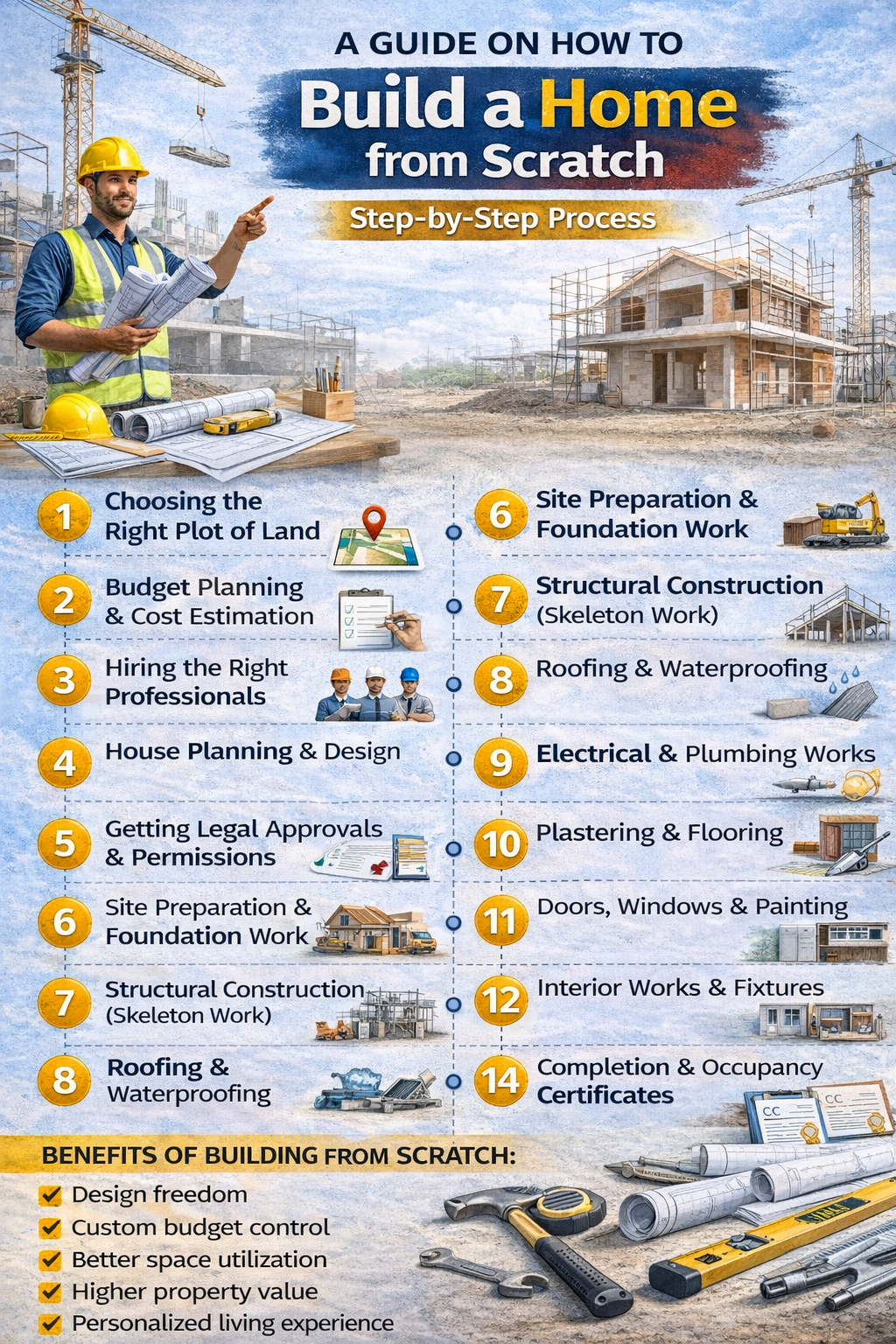
Introduction
Building a home from scratch is a dream for many homeowners. It allows you to design a space that matches your lifestyle, budget, and long-term goals. However, the process requires careful planning, legal approvals, expert execution, and the right construction team.
This guide explains how to build a house from scratch, covering every stage—from land selection to final handover—helping first-time homeowners make confident decisions.
Step 1: Choosing the Right Plot of Land
The foundation of your home starts with selecting the right land.
Key Factors to Consider:
Location and connectivity
Legal clearances and title verification
Soil quality and plot orientation
Access to water, electricity, and roads
Compliance with local zoning laws
It’s advisable to conduct a soil test to determine load-bearing capacity before finalizing the plot.
Step 2: Budget Planning and Cost Estimation
Before construction begins, prepare a realistic budget.
Budget Should Include:
Land cost
Construction cost per sq ft
Design and approval charges
Interior works
Contingency fund (10–15%)
Consulting a professional contractor helps estimate the total house construction cost accurately and avoid overspending.
Step 3: Hiring the Right Professionals
Building a home requires skilled experts.
Professionals Needed:
Architect for house planning
Structural engineer for safety
Contractor for execution
Interior designer (optional)
Choosing an experienced residential construction company ensures quality workmanship and timely completion.
Step 4: House Planning and Design
This is where your dream home takes shape.
Design Considerations:
Number of floors and rooms
Vaastu compliance (if required)
Natural lighting and ventilation
Future expansion possibilities
Energy-efficient design
Architectural drawings, structural plans, and 3D elevations are prepared at this stage.
Step 5: Getting Legal Approvals and Permissions
Construction cannot begin without proper approvals.
Mandatory Approvals:
Building plan approval
Panchayat or municipal clearance
Environmental clearance (if applicable)
Electricity and water sanctions
Starting construction without approvals can lead to penalties or demolition.
Step 6: Site Preparation and Foundation Work
The construction process begins with site clearance and marking.
Foundation Stage Includes:
Excavation
Footing and PCC
RCC foundation
Plinth beam construction
A strong foundation ensures the structural stability of your house.
Step 7: Structural Construction (Skeleton Work)
This stage forms the main structure of the house.
Structural Works:
Columns, beams, and slabs
Brick or AAC block masonry
Staircase construction
Roof slab casting
High-quality materials and proper curing are critical during this phase.
Step 8: Roofing and Waterproofing
The roof protects your home from weather conditions.
Important Points:
Proper slab thickness
Waterproofing treatment
Drainage slope for rainwater
Terrace finishing
Quality waterproofing prevents leakage and future repairs.
Step 9: Electrical and Plumbing Works
MEP (Mechanical, Electrical, Plumbing) works are carried out after structural completion.
Plumbing Includes:
Water supply lines
Drainage pipelines
Bathroom and kitchen fittings
Electrical Includes:
Concealed wiring
Switchboards
Earthing and safety systems
Planning at this stage avoids future wall breaking.
Step 10: Plastering and Flooring
Plastering gives shape and finish to walls.
Finishing Works:
Internal and external plastering
Floor tiling or marble installation
Staircase finishing
Good finishing improves aesthetics and durability.
Step 11: Doors, Windows, and Painting
Installations Include:
Main door and internal doors
Windows and ventilators
Primer and final paint coats
Weather-resistant paints are recommended for exterior walls.
Step 12: Interior Works and Fixtures
Interior works bring functionality and comfort.
Interior Elements:
Modular kitchen
Wardrobes and storage
Bathroom fixtures
False ceiling and lighting
Choose durable materials for long-term performance.
Step 13: Final Inspection and Quality Checks
Before moving in, inspect the house thoroughly.
Checklist:
Plumbing leakage test
Electrical safety check
Waterproofing test
Finish quality review
Any issues should be rectified before final handover.
Step 14: Completion Certificate and Occupancy Certificate
After construction completion:
Apply for Completion Certificate (CC)
Obtain Occupancy Certificate (OC)
These documents legally allow you to occupy the house.
Common Mistakes to Avoid While Building a Home
Starting without approvals
Choosing low-quality materials
Poor contractor selection
Ignoring waterproofing
No contingency budget
Avoiding these mistakes ensures smooth construction.
Benefits of Building a Home from Scratch
Complete design freedom
Better space utilization
Custom budget control
Higher property value
Personalized living experience
Final Thoughts
Building a home from scratch is a rewarding journey when done correctly. With proper planning, legal compliance, quality materials, and expert guidance, you can turn your dream into a durable and beautiful home.
Partnering with an experienced residential construction company ensures a hassle-free and transparent building process from start to finish.


