

Introduction
Plumbing fixtures play a critical role in every residential and commercial building. From bathrooms and kitchens to utility and outdoor areas, the right plumbing fixtures ensure proper water flow, hygiene, comfort, and long-term durability. Whether you are building a new home or renovating an existing one, understanding plumbing fixtures, their types, materials, and selection tips will help you make informed decisions.
In this guide, we’ll cover everything you need to know about plumbing fixtures, especially useful for homeowners, builders, and contractors.
What Are Plumbing Fixtures?
Plumbing fixtures are devices connected to a plumbing system that deliver water and remove waste. They are permanent or semi-permanent fittings such as taps, sinks, toilets, showers, and washbasins.
High-quality plumbing fixtures improve water efficiency, reduce maintenance costs, and enhance the overall aesthetics of your home.
Importance of Choosing the Right Plumbing Fixtures
Selecting the right plumbing fixtures is essential because:
They affect daily water usage
They influence hygiene and comfort
They impact long-term maintenance costs
They enhance bathroom and kitchen aesthetics
They ensure compliance with plumbing standards
Poor-quality fixtures may lead to leakage, corrosion, and frequent repairs.
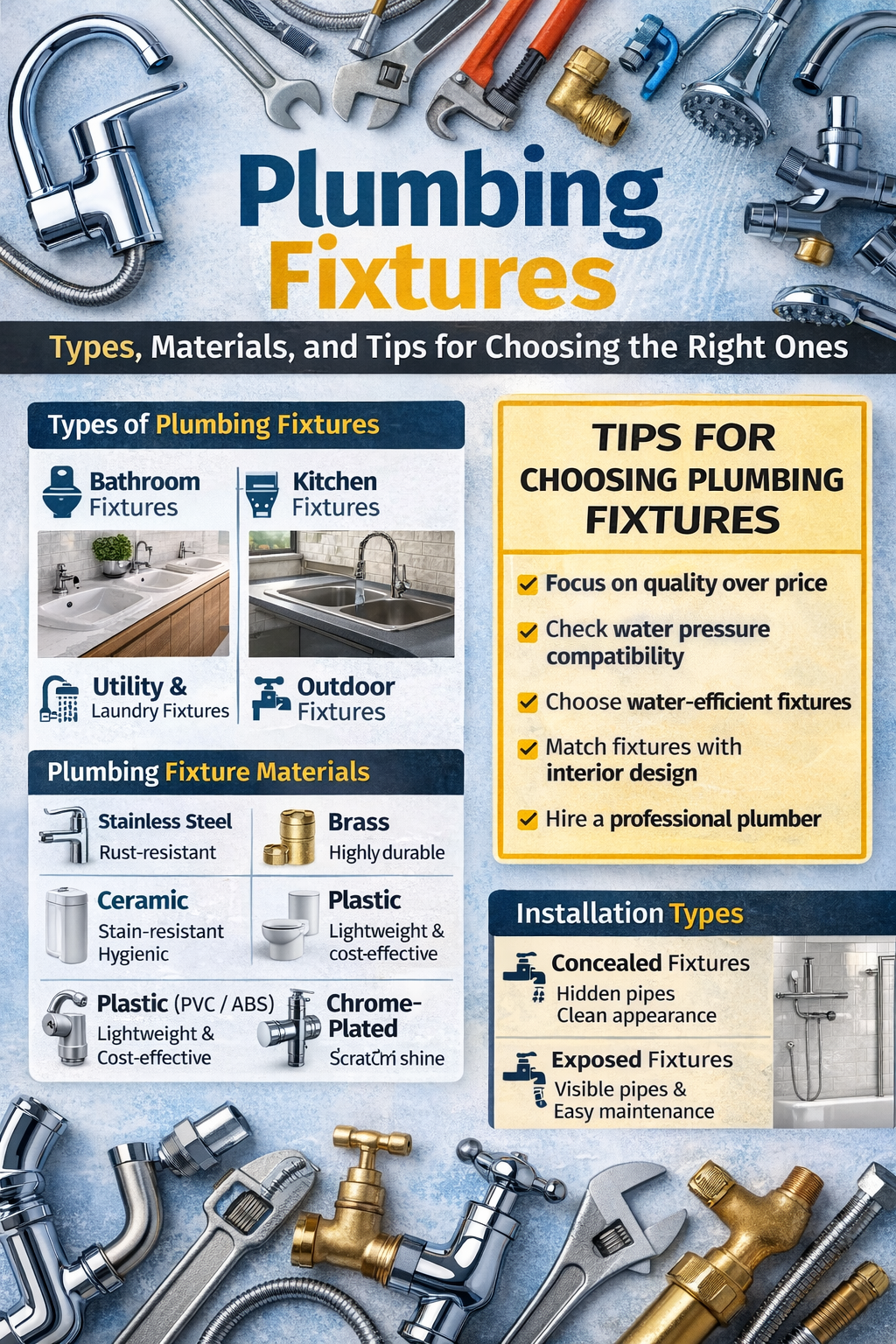
Types of Plumbing Fixtures
1. Bathroom Plumbing Fixtures
Bathroom fixtures are the most commonly used plumbing components in any home.
a) Wash Basins
Used for handwashing and personal hygiene.
Common types:
Wall-mounted wash basins
Countertop basins
Pedestal wash basins
Under-counter basins
b) Water Closets (Toilets)
Essential sanitary fixtures for waste disposal.
Types include:
Western toilets (EWC)
Indian toilets (IWC)
Wall-hung toilets
One-piece and two-piece toilets
c) Showers & Faucets
Used for bathing and water control.
Types:
Overhead showers
Hand showers
Concealed shower mixers
Exposed shower fittings
2. Kitchen Plumbing Fixtures
Kitchen fixtures should be durable, hygienic, and easy to clean.
a) Kitchen Sinks
Types include:
Stainless steel sinks
Quartz sinks
Single-bowl and double-bowl sinks
b) Kitchen Faucets
Common types:
Single-handle faucets
Pull-down faucets
Wall-mounted faucets
Sensor-based faucets
3. Utility & Laundry Fixtures
Used in service areas and utility spaces.
Examples:
Utility sinks
Bib taps
Washing machine inlet valves
Floor traps
4. Outdoor Plumbing Fixtures
Used for gardening, car washing, and outdoor cleaning.
Common fixtures:
Garden taps
Hose bibs
Outdoor showers
Plumbing Fixture Materials Explained
The material of plumbing fixtures determines durability, maintenance, and appearance.
1. Stainless Steel
Rust-resistant
Long-lasting
Easy to maintain
Commonly used for kitchen sinks
2. Brass
Highly durable
Corrosion-resistant
Ideal for faucets and valves
Premium quality option
3. Ceramic
Used for wash basins and toilets
Hygienic and easy to clean
Resistant to stains
4. Plastic (PVC / ABS)
Cost-effective
Lightweight
Used in taps, traps, and accessories
Less durable compared to metal
5. Chrome-Plated Fixtures
Attractive finish
Scratch-resistant
Requires regular cleaning to maintain shine
Plumbing Fixtures Based on Installation Type
1. Concealed Plumbing Fixtures
Pipes hidden inside walls
Clean and modern appearance
Higher installation cost
Requires skilled plumbers
2. Exposed Plumbing Fixtures
Visible pipes and fittings
Easy maintenance
Cost-effective
Common in utility areas
Tips for Choosing the Right Plumbing Fixtures
1. Focus on Quality Over Price
Cheap fixtures may save money initially but lead to leaks and replacements. Always choose ISI-marked or branded fixtures.
2. Check Water Pressure Compatibility
Ensure the fixtures are suitable for your home’s water pressure to avoid poor performance.
3. Choose Water-Efficient Fixtures
Look for low-flow faucets and dual-flush toilets to reduce water consumption.
4. Match Fixtures With Interior Design
Select finishes and designs that complement your bathroom and kitchen interiors.
5. Consider Maintenance & Spare Availability
Choose brands that offer easy spare parts availability and service support.
6. Hire a Professional Plumber
Improper installation can damage even the best-quality fixtures. Always rely on experienced plumbing professionals.
Common Plumbing Fixture Problems & Solutions
| Problem | Cause | Solution |
|---|---|---|
| Leaking taps | Worn-out washers | Replace washers |
| Low water flow | Blocked aerators | Clean or replace aerator |
| Rust stains | Poor-quality material | Upgrade to brass or SS |
| Loose fittings | Improper installation | Re-tighten or reinstall |
Popular Plumbing Fixture Brands (India)
Jaquar
Hindware
Cera
Parryware
Kohler
Grohe
Choosing branded fixtures ensures quality, warranty, and durability.
Plumbing Fixtures for New Home Construction
During new home construction, plumbing fixtures should be planned during the design and civil construction stage. Proper placement, concealed piping, and fixture compatibility reduce future modifications and costs.
Builders and homeowners should finalize:
Bathroom layouts
Fixture models
Water inlet and outlet points
Drainage slopes
Final Thoughts
Plumbing fixtures are not just functional components—they directly impact comfort, hygiene, water efficiency, and the overall value of your home. By understanding types of plumbing fixtures, materials used, and expert selection tips, you can make smarter decisions for your construction or renovation project.
Whether you are building a new house or upgrading your existing space, investing in high-quality plumbing fixtures ensures peace of mind and long-term performance.
Contact us today for a free consultation or site evaluation
Tags: Engineering


