

Introduction
Concrete quality plays a crucial role in the strength and durability of any structure. One of the most important tests used on construction sites to assess concrete workability is the slump test. Understanding the slump value of concrete helps ensure proper placement, compaction, and long-term performance of concrete structures.
This comprehensive guide explains what slump value is, why it matters, types of slump, standard values, and common mistakes to avoid.
What Is Slump Value of Concrete?
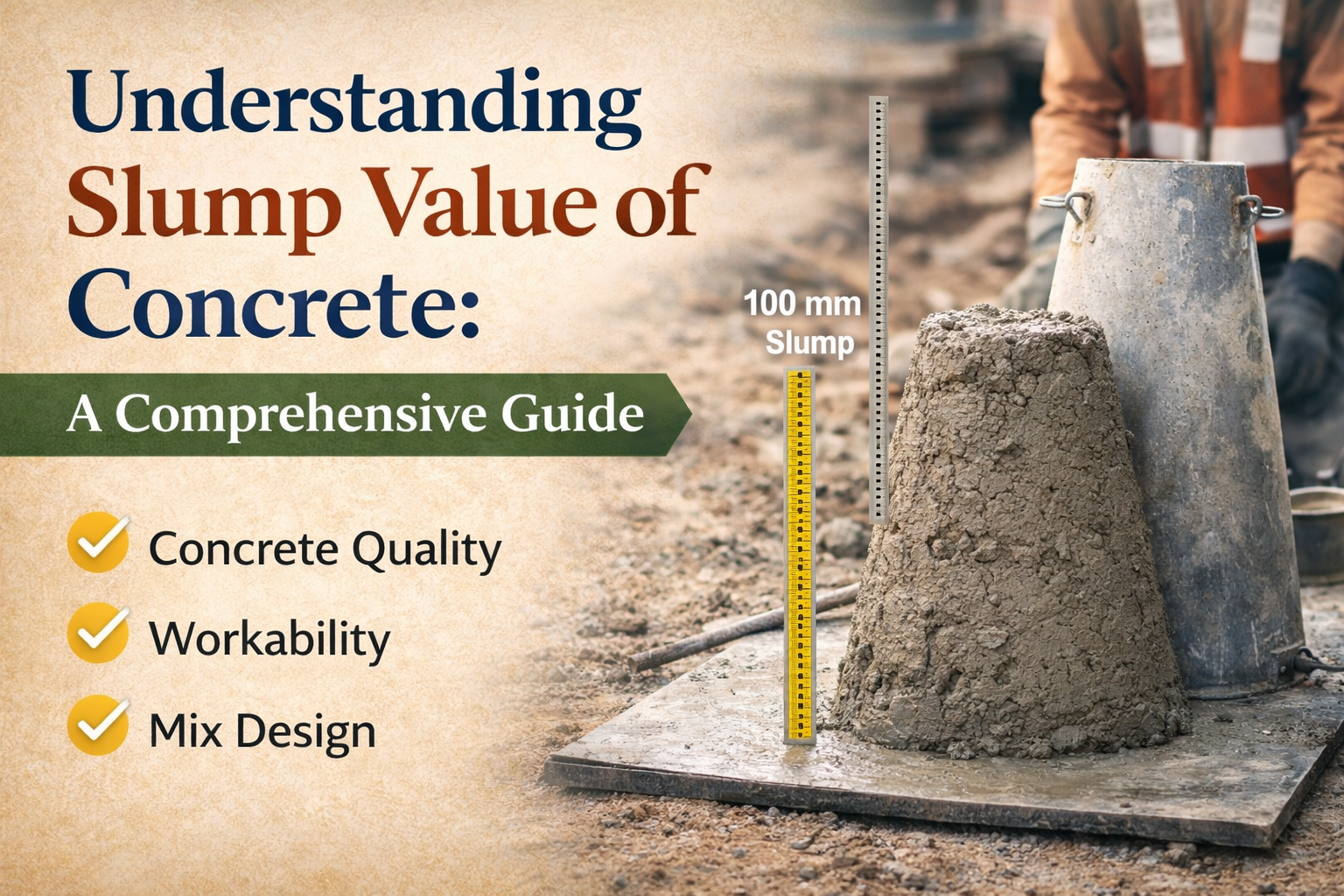
The slump value of concrete is a measure of its workability or consistency in the fresh (plastic) state. It indicates how easily concrete can be mixed, transported, placed, and compacted without segregation.
The slump value is measured in millimeters (mm) using a standard slump cone test.
Why Slump Value Is Important in Construction
Proper slump value ensures:
Easy placement of concrete
Proper compaction without honeycombing
Uniform strength and durability
Reduced risk of segregation and bleeding
Incorrect slump can lead to poor concrete quality and structural issues.
Slump Test – How It Is Conducted, Equipment Used for Slump Test
Slump cone (300 mm height)
Tamping rod
Base plate
Measuring scale
Slump Test Procedure
Place the slump cone on a flat, non-absorbent surface
Fill concrete in three equal layers
Compact each layer with 25 strokes
Lift the cone vertically upward
Measure the drop in concrete height
The difference between the original height and the slumped concrete is the slump value.
Types of Slump in Concrete
True Slump
Concrete settles uniformly
Indicates good cohesion
Acceptable and desirable result
Shear Slump
Concrete slips sideways
Indicates lack of cohesion
Mix should be redesigned
Collapse Slump
Concrete collapses completely
Indicates too much water
Not acceptable for structural work
Standard Slump Values for Different Works
| Type of Construction | Recommended Slump |
|---|---|
| Road Concrete | 20–30 mm |
| Mass Concrete (Foundations) | 25–50 mm |
| RCC Beams & Slabs | 75–100 mm |
| Columns & Pumped Concrete | 100–150 mm |
Selecting the correct slump value is critical for RCC construction quality.
Factors Affecting Slump Value of Concrete
Water-Cement Ratio
Higher water content increases slump but reduces strength.
Aggregate Size & Shape
Rounded aggregates increase workability compared to angular ones.
Cement Content
Higher cement content improves cohesion and slump stability.
Admixtures
Plasticizers and superplasticizers increase slump without adding extra water.
Common Mistakes Related to Slump Value
Adding excess water on-site to increase slump
Ignoring slump test results during concreting
Using the same slump value for all structural elements
Not accounting for weather conditions
These mistakes can severely impact concrete strength and durability.
Slump Value vs Concrete Strength
A higher slump does not mean stronger concrete. In fact:
Excessive slump often reduces compressive strength
Proper mix design balances workability and strength
Always follow mix design specifications approved by engineers.
Importance of Slump Test in Residential Construction
In residential projects like:
Foundations
Columns
Slabs
Staircases
Maintaining proper slump ensures long-lasting and crack-free structures. Reputed residential construction companies strictly monitor slump values on-site.
Conclusion
The slump value of concrete is a simple yet powerful indicator of concrete quality. Regular slump testing helps ensure proper workability, strength, and durability of concrete in all types of construction.
Understanding and controlling slump value is essential for achieving high-quality, safe, and reliable structures.
Need Expert Construction Support?
Choose a professional construction team that follows quality control practices, including slump testing, mix design compliance, and proper supervision.
Contact us today for a free consultation or site evaluation
Tags: Construction


