

Introduction
In house construction, structural strength and durability are just as important as design and aesthetics. One crucial structural element that often goes unnoticed by homeowners—but plays a major role in building stability—is the plinth beam.
If you’re planning to build a house or working with a construction company, understanding what a plinth beam is and why it matters can help you make better decisions and avoid future structural issues.
This essential guide explains what a plinth beam is, its purpose, benefits, construction details, and why it is important in modern house construction.
What Is a Plinth Beam in House Construction?
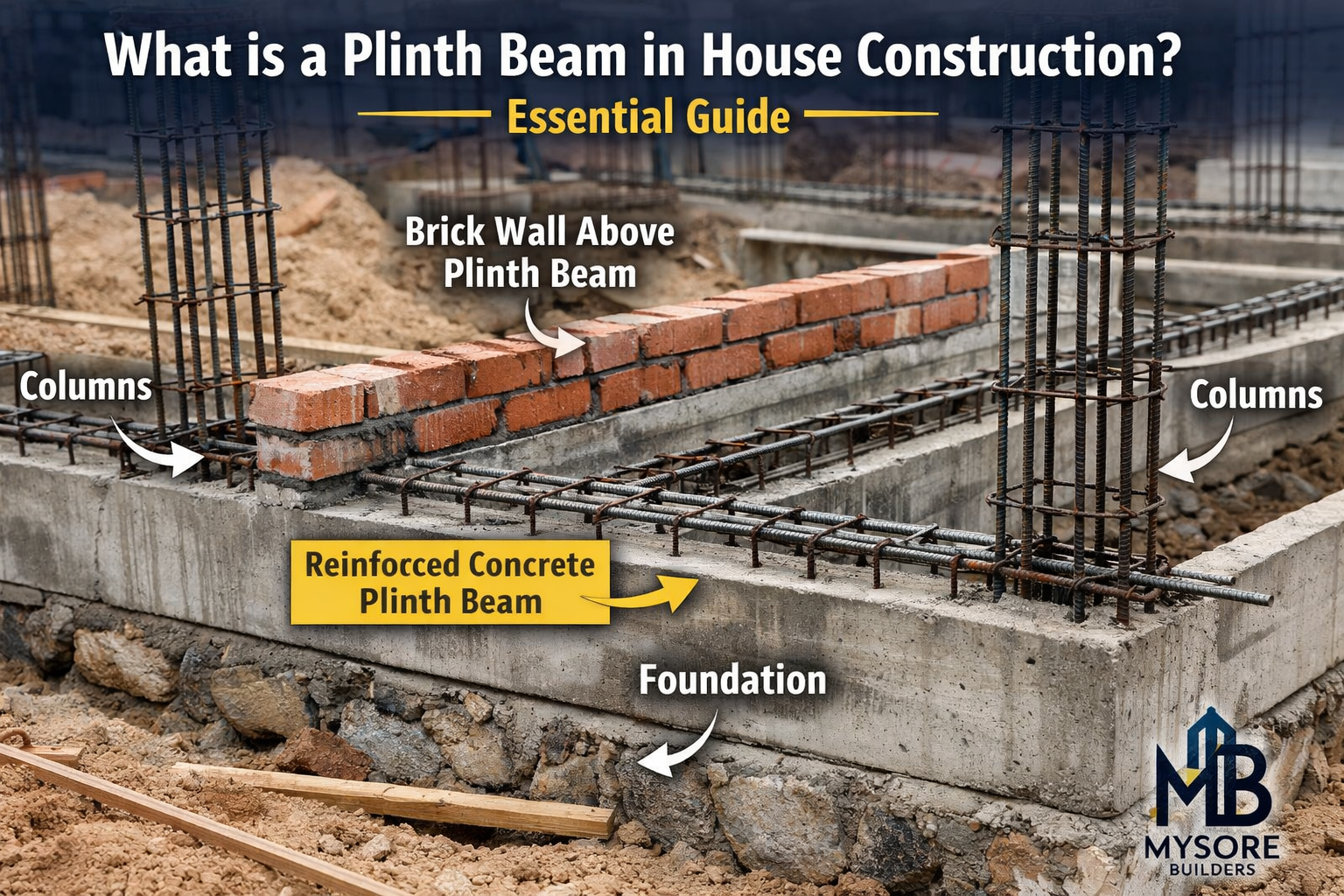
A plinth beam is a reinforced concrete beam constructed at the plinth level of a building. The plinth level is the point where the building’s superstructure (walls and columns) meets the foundation, usually just above ground level.
In simple terms, a plinth beam:
Runs horizontally across the building
Connects all the columns at the plinth level
Distributes loads evenly
Protects the building from settlement and cracks
Plinth beams are commonly used in residential house construction, especially in areas with weak soil, high moisture, or seismic activity.
Where Is a Plinth Beam Located?
A plinth beam is located:
Above the foundation
At ground or floor level
Below the brickwork or superstructure
It acts as a transition element between the foundation and the walls.
Why Is a Plinth Beam Important in House Construction?
Plinth beams are not just optional elements—they are critical for ensuring long-term stability. Here’s why they are important:
1. Prevents Differential Settlement
Different parts of the foundation may settle unevenly due to soil variation. A plinth beam ties all columns together and distributes loads evenly, reducing the risk of cracks in walls.
2. Improves Structural Stability
By connecting columns at the base, a plinth beam improves the building’s overall structural integrity and stiffness.
3. Reduces Cracks in Walls
One of the biggest benefits of a plinth beam is that it minimizes cracks in masonry walls caused by soil movement or foundation settlement.
4. Acts as a Load Distribution Element
The plinth beam helps transfer loads from walls to columns and foundations efficiently.
5. Protects Against Moisture
Plinth beams help raise the building above ground level, reducing the risk of moisture seepage and dampness in walls.
Is a Plinth Beam Mandatory?
In many modern construction practices, especially in India, plinth beams are strongly recommended, though not always legally mandatory.
Plinth beams are especially important when:
Soil bearing capacity is low
The building is in an earthquake-prone zone
The structure has multiple columns
The building is load-bearing with masonry walls
Most experienced construction companies and civil engineers include plinth beams as a standard practice in house construction.
Difference Between Plinth Beam and Tie Beam
Many people confuse plinth beams with tie beams. Here’s a simple comparison:
| Feature | Plinth Beam | Tie Beam |
|---|---|---|
| Location | At plinth level (ground level) | Above plinth level |
| Purpose | Prevent settlement & cracks | Tie columns together |
| Load Transfer | Transfers wall load | Usually non-load bearing |
| Usage | Common in house construction | Used when columns are tall |
Plinth Beam Construction Details
1. Materials Used
Cement
Sand
Aggregates
Steel reinforcement (rebars)
2. Typical Plinth Beam Size
The size may vary depending on structural design, but common dimensions include:
Width: 230 mm to 300 mm
Depth: 200 mm to 300 mm
Note: The exact size and reinforcement must be decided by a structural engineer.
Plinth Beam Reinforcement Details
Plinth beams are reinforced concrete members, typically consisting of:
2 or 4 main longitudinal steel bars
Stirrups (rings) at regular intervals
Concrete grade usually M20 or higher
Proper reinforcement ensures strength, flexibility, and resistance to cracking.
Advantages of Providing a Plinth Beam
Using a plinth beam in house construction offers multiple benefits:
Enhances building safety
Reduces maintenance costs
Prevents wall cracks
Improves load distribution
Provides better earthquake resistance
Increases lifespan of the structure
Disadvantages of Not Providing a Plinth Beam
Skipping a plinth beam can lead to serious long-term problems:
Cracks in walls
Uneven settlement
Structural instability
Higher repair and maintenance costs
Moisture seepage from the ground
This is why reputed house construction companies strongly advise including plinth beams.
Plinth Beam in Load-Bearing Structures
In load-bearing buildings, plinth beams play an even more critical role. They:
Support masonry walls
Reduce stress concentration
Improve overall performance of the structure
For load-bearing houses, plinth beams are highly recommended.
Plinth Beam in RCC Framed Structures
In RCC framed structures, plinth beams:
Tie columns together at ground level
Help resist lateral forces
Improve stiffness of the frame
They are especially useful in multi-storey buildings and seismic zones.
Cost of Plinth Beam in House Construction
The cost of a plinth beam depends on:
Length of the beam
Steel quantity
Concrete grade
Labor charges
On average, the cost is a small percentage of total construction cost but provides huge long-term benefits, making it a cost-effective structural element.
Common Mistakes to Avoid While Constructing a Plinth Beam
Using improper reinforcement
Ignoring structural design
Poor concrete quality
Inadequate curing
Not connecting all columns properly
Always ensure the work is supervised by a qualified civil engineer or construction company.
Do All Houses Need a Plinth Beam?
While small single-room structures may not require one, most modern houses benefit from a plinth beam, especially:
Independent houses
Villas
Duplex homes
Houses on weak soil
If in doubt, always consult a structural engineer.
Role of a Good Construction Company
A professional construction company ensures:
Proper structural design
Correct beam sizing
Quality materials
Accurate reinforcement placement
Long-lasting construction
Experienced builders never skip critical elements like plinth beams, as they directly affect safety and durability.
Conclusion
Understanding what a plinth beam is in house construction helps homeowners appreciate the importance of strong structural planning. Though often hidden from view, a plinth beam plays a vital role in preventing cracks, improving stability, and extending the life of your house.
If you’re planning to build a home, ensure your construction includes a well-designed plinth beam supervised by professionals. Investing in proper structural elements today will save you from costly repairs in the future. Mysore Builders
Contact us today for a free consultation or site evaluation
Tags: Construction


